


Sleep Wrinkles: How Your Pillow Is Aging Your Skin (And How to Stop It)
You do everything right during the day. Sunscreen, serums, the whole routine. But here's something most people don't think about: sleep wrinkles — the lines that form on your face from pressing it into a pillow for six to eight hours every single night. They're different from expression wrinkles. They show up in different places. And if you're not addressing them, your pillow might be undoing some of the work your skincare routine is putting in.
I've been treating skin for over twenty years, and I can't tell you how many clients have come in pointing at lines on their chest, cheeks, or chin that don't match their expression patterns. Those are sleep lines. And the good news? Once you understand what causes them, they're one of the most preventable signs of aging.

What Are Sleep Wrinkles and How Are They Different from Expression Lines?
Most people think of wrinkles as a single category, but dermatologists and aestheticians recognize two distinct types:
Expression wrinkles form from repeated facial movements — smiling, squinting, frowning. These show up in predictable places: crow's feet, forehead lines, the "11s" between your brows. They follow the natural movement patterns of your facial muscles.
Sleep wrinkles are caused by mechanical compression — your face pressing against a surface for hours at a time. They tend to appear in places that don't align with expression patterns: diagonal lines across the cheeks, vertical lines on the chin or forehead, creases across the chest and décolletage. A study published in the Aesthetic Surgery Journal identified specific sleep wrinkle patterns that are distinct from expression-related lines, and researchers noted that these lines can become permanently etched into the skin over time.
Here's what makes sleep wrinkles frustrating: they're happening while you're unconscious. You can't consciously relax your face the way you might try to stop squinting during the day. Your pillow is applying sustained pressure to the same areas of your face night after night, and over the years, that repetitive compression can lead to visible lines that become harder to address.
How Your Sleeping Position Affects Your Skin
Your sleep position has a direct impact on where — and how aggressively — sleep wrinkles develop.
Side sleepers tend to develop sleep lines on the cheek, chin, and around the mouth on the side they favor. If you always sleep on your right side, that's where the lines will show up first. Over time, you might notice asymmetry — one side of your face looking more lined than the other. Side sleeping also compresses the chest, which is why many women notice vertical lines on their décolletage.
Stomach sleepers have it the worst when it comes to sleep wrinkles. Your entire face is pressed into the pillow, creating compression across the forehead, cheeks, and chin simultaneously. This position also puts pressure on the delicate under-eye area, which can contribute to puffiness and the appearance of dark circles in the morning.
Back sleepers are in the best position for their skin — literally. When you sleep on your back, nothing is pressing against your face. No compression, no creasing, no pillow face in the morning. It's the reason dermatologists and aestheticians (myself included) have been recommending back sleeping for years.
But here's the reality: telling someone to "just sleep on your back" is like telling someone to "just stop snoring." Most people shift positions throughout the night without even knowing it. About 70% of people are side sleepers, and simply deciding to sleep differently isn't a realistic solution for most. That's where the right pillow design comes in.

Why Sleep Wrinkles Get Worse with Age
If you're in your twenties, you might wake up with pillow creases that disappear within an hour. But if you're in your thirties, forties, or beyond, you've probably noticed those lines sticking around longer — sometimes all day. That's not your imagination.
As skin matures, it naturally produces less of the structural proteins that give it bounce and resilience. Younger skin can recover from compression quickly because it has more natural elasticity. As that elasticity gradually decreases over time, the skin takes longer to bounce back from being pressed and folded. Eventually, those temporary sleep creases become permanent lines.
This is also why sun damage accelerates sleep wrinkle formation. UV exposure breaks down the skin's structural support over time, which means skin that's had significant sun exposure loses its ability to recover from compression even faster. It's a compounding effect: nightly compression plus reduced resilience equals lines that progressively deepen.
The bottom line: addressing sleep wrinkles earlier is always easier than trying to address them later. Prevention is the most effective strategy.
How to Help Prevent Sleep Wrinkles
Now for the part you actually came here for — what can you do about it? Here are the strategies that I recommend to my clients, ranked from most impactful to supplementary:
1. Change Your Pillowcase Fabric
Cotton pillowcases grip your skin. When you move during the night, cotton creates friction and pulls on the skin surface, contributing to creasing. Switching to silk or satin reduces that friction significantly. Your skin slides against the fabric instead of bunching against it. This won't eliminate sleep wrinkles, but it reduces one contributing factor.
2. Use a Pillow Designed to Reduce Facial Compression
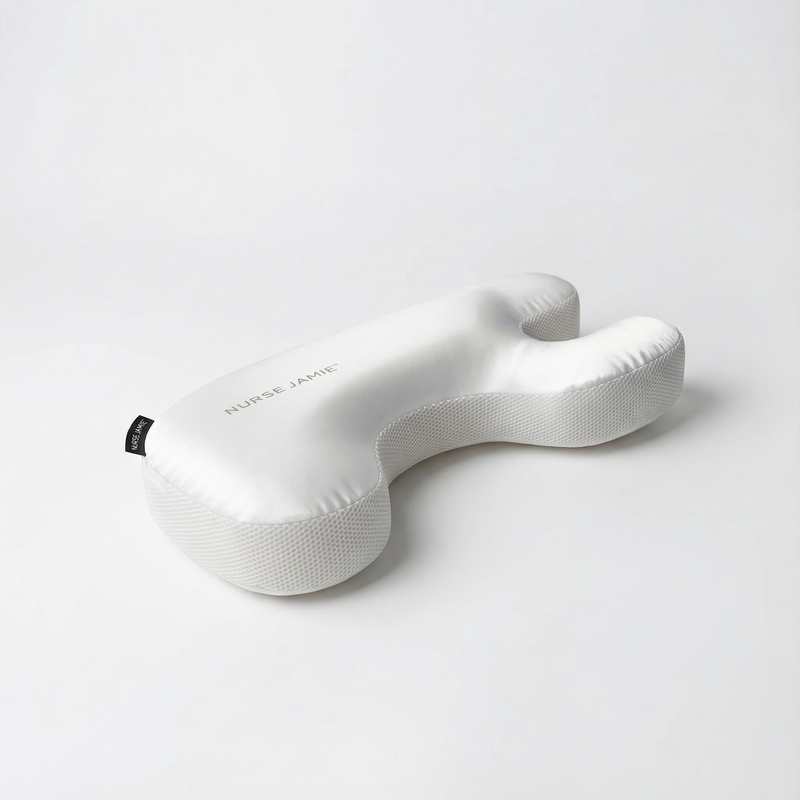
This is the biggest single change you can make. Standard pillows are flat surfaces that compress whatever part of your face presses against them. A pillow designed specifically to cradle and support your head while reducing contact with your facial skin addresses the root cause of sleep wrinkles — not just a symptom.

Beauty Bear® Memory Foam Skincare Pillow
U-shaped memory foam design minimizes facial compression for both side and back sleepers. Available in silky satin and breathable bamboo covers. Compact and travel-friendly.
Shop Now →The Beauty Bear Age Delay Pillow is the pillow I designed specifically for this purpose. It uses memory foam contoured into a U-shape to support your head while minimizing the surface area that contacts your cheeks, chin, and forehead. Whether you sleep on your back or your side, the design helps reduce the compression that causes sleep lines. It's not about forcing you to sleep in one position — it's about making every position better for your skin.
3. Apply a Rich Night Cream Before Bed
A well-formulated night cream does two things relevant to sleep wrinkles: it supports the skin's overnight renewal process, and it creates a barrier that helps skin slide rather than stick against your pillowcase. Look for formulas with peptides and growth factors — ingredients that help support the appearance of firmer, more resilient-looking skin. The Nurse Jamie EGF Face Cream is formulated with Epidermal Growth Factor, a peptide that helps improve the look of skin's texture and tone while you sleep.
4. Try to Start the Night on Your Back
Even if you shift during the night, beginning in a back-sleeping position means you spend at least part of the night without any facial compression. Some people find that placing a pillow under their knees makes back sleeping more comfortable and helps them stay in that position longer. It's not about perfection — even a few extra hours of back sleeping per night can make a difference over time.
5. Stay Consistent with Your Daytime Skincare
The stronger and more resilient your skin's overall appearance, the better it can handle the nightly compression. Sunscreen during the day helps protect the skin's structural integrity. Antioxidant serums help support the skin's natural defenses. And consistent use of peptide-rich products helps maintain the appearance of firmness and bounce that allows skin to recover from creasing more quickly.

Can You Reverse Sleep Wrinkles That Have Already Formed?
This is the question everyone wants answered, and the honest answer is: it depends on how established the lines are.
Newer sleep lines — the kind that showed up in the last year or two and are still relatively shallow — can often be significantly improved with a combination of prevention (better pillow, sleeping position adjustments) and consistent skincare. When you remove the nightly compression that caused the lines and support the skin's appearance with the right products, many people see a visible improvement in their skin's texture over several months.
Deeper, more established sleep wrinkles that have been forming for years are harder to address with at-home care alone. They may benefit from professional treatments in addition to preventive changes. However, even with deeper lines, stopping the nightly compression prevents them from getting worse — and that matters.
My approach with clients is always prevention first, improvement second. Stop the damage from continuing, then work on the appearance of what's already there. And the best tool I've found for the prevention side is a pillow that actually addresses the mechanical cause of the problem.
"Pillow Face" Is Real — Here's What It Looks Like
You've probably heard the term "pillow face" used to describe a puffy, slightly swollen look in the morning. But in the context of sleep wrinkles, pillow face refers to the specific pattern of lines and creases that develop from habitual pillow compression.
Common signs include:
- A diagonal line running from the outer corner of the eye down across the cheek — this doesn't follow any natural expression pattern and is a classic sleep wrinkle
- Vertical lines on the chin or along the jawline on one side
- Horizontal or diagonal lines across the chest and décolletage
- Asymmetric aging — one side of the face looking noticeably more lined than the other (this often corresponds with your dominant sleeping side)
- Creases that are visible first thing in the morning and gradually soften throughout the day, but never fully disappear
If you recognize any of these patterns on your own face, there's a very good chance your pillow is a contributing factor. The fix isn't another serum — it's changing the surface your skin spends a third of its life pressed against.

Building a Nighttime Routine That Protects Against Sleep Wrinkles
Here's the full nighttime protocol I give my clients who want to address sleep wrinkles:
Step 1: Double cleanse. Remove makeup and sunscreen thoroughly. You don't want product residue transferring to your pillow and then sitting on your skin all night.
Step 2: Apply your treatment products. Serum first, then moisturizer. If you're using the EGF Face Cream, apply it as your final skincare step — the peptide-rich formula works overnight to help support the appearance of smoother, more resilient-looking skin.
Step 3: Use a face roller for two to three minutes. Rolling with the UpLift Massaging Beauty Roller after applying your night cream helps press products into the skin and releases tension in the facial muscles before sleep. It's also a great signal to your body that it's time to wind down.
Step 4: Position yourself on your Beauty Bear pillow. Whether you start on your back or on your side, the contoured memory foam U-shape design helps reduce the facial compression that leads to sleep lines.
Step 5: Let your skin do the rest. Skin's natural renewal process is most active during sleep. With the right products on your skin and the right pillow under your head, you're giving your skin the best possible environment to look its best by morning.
Your Pillow Is the Skincare Step You're Missing
Think about it this way: you spend roughly a third of your life in contact with your pillow. That's about 2,500 hours per year of sustained compression for side and stomach sleepers. Over a decade, that's 25,000 hours of your face being pressed into a surface. The cumulative impact on skin appearance is significant — and it's entirely preventable.
The best approach combines multiple strategies: sleeping on your back when you can, using a pillow that reduces compression when you can't, protecting your skin with the right nighttime products, and supporting your skin's overnight renewal appearance with peptide-rich formulas.
You don't need to overhaul your entire life. Start with one change — swap your pillow, adjust your position, upgrade your night cream — and build from there. Every improvement compounds over time, and the earlier you start, the more your future skin will thank you.
Stop Letting Your Pillow Work Against Your Skincare
The Beauty Bear® Age Delay Pillow is designed with U-shaped memory foam to reduce the facial compression that causes sleep wrinkles — so your skin can actually recover and look its best every morning.
Shop the Beauty Bear Pillow


